
No, not out of the Chicagoland region but to a different blog: http://redcrossstories.wordpress.com/
What's the difference? Glad you asked. Our new blog is entitled Red Cross Stories. It's a great way to share information about the work we've been doing here at the Red Cross in Chicago as well as around the world. We wanted to make this blog about everyone who has ever worked, volunteered, or been helped by the Red Cross. So, we've installed a Submit Your Story form where you can tell the world your story about how the Red Cross has helped you or someone you know and it will be published right onto our blog!
So head on over and check out the new features of our storybook blog. Read up on some amazing stories or submit one of your own.
-From everyone at The American Red Cross of Greater Chicago
Monday, March 19, 2012

Wednesday, January 25, 2012
Meet Madeline
Meet Madeline
January is National Blood Donor Month
The American Red Cross needs to collect 22,000 units of blood each weekday and around 15,000 units each weekend to meet patient needs. Every two seconds, someone needs blood.
Will you help us?
January is National Blood Donor Month
The American Red Cross needs to collect 22,000 units of blood each weekday and around 15,000 units each weekend to meet patient needs. Every two seconds, someone needs blood.
Will you help us?
Thursday, December 29, 2011
Thinking of New Year’s resolutions? Resolve to give.
 This morning--like every morning--I flicked on the radio, let the shower run, and threw a pot of water on the stove for coffee. The radio hosts were talking about New Year’s. My mind was still groggy with sleep, but I think they were saying that crime rates tend to go up right before the turn of the year. “Perhaps it’s because they make New Years’ resolutions,” one said. “They vow to be better people, and they need to get in one last misdeed before the year ends.”
Naturally, I started thinking about my own resolutions for the coming year: be less wasteful, learn to play piano, drink less coffee, learn Spanish… I’m sure my list will differ slightly from yours, but some resolutions make our lists year after year. Among them are the desires to lose weight, learn something new, or spend time with family.
It’s no surprise that we resolve to make some of the same changes every year. Many studies show that big changes are hard to make, and old habits are hard to change, particularly when attempted all at once. When stressed, even small temptations are hard to resist--which must be why, after a long day at work, I end up elbow-deep in a bag of chips before remembering I had intended to go for a run.
Now, we’re not in any position to help you achieve many of your random resolutions, but the Red Cross can definitely help you with one that routinely makes the list: help someone else.
We’ve been helping people for 130 years. So you know that if you get involved with us, you’re sure to follow through on at least one resolution.
So, help us help others. You can...
- Volunteer as a disaster responder, teach about health and safety, or help out behind-the scenes. Our volunteers enjoy the satisfaction of helping others every single day.
- Donate to make the work we do possible. It’s an easy, guaranteed way to help families struck by disaster. We respond to 3 to 4 home fires a day, and even $25 will buy five blankets for a family left out in the cold when they suffer such a tragedy.
- If you simply don’t have the time to volunteer, or the cash to help out, give blood. The one pint of you donate can save up to three lives--that’s just a few minutes out of your day to check “Help someone else” off your list of resolutions… three times! Find a drive near you.
Make sure your resolution doesn’t show up on next year’s list. This year, join Fred, and resolve to give.
Written by: Jonathan Bressler
Thursday, December 01, 2011
Chicago Rallies Hope for Heroes
Outside the main entrance to the North Kedzie Armory, a gathering buzz of anticipation travelled through the crowd. Guys in swarthy coats at the outskirts took a break from the chatter to cast an anxious glance at the door every couple of minutes. Guys near the entrance inched up the stairs to snare a glimpse through the windows. The formation soon swelled the sidewalk and seeped into the flanks of the building. Some of them had been there for two or three hours already; a tightly wrapped man on a wheelchair named Zellmore had come at 3 in the morning. He wanted to make sure he got in early so all the good stuff would still be there.
It was the day before Veteran’s Day and the bone sinking chill of the night before still clung to the air surrounding the Armory. Inside, volunteers were stacking the sweatpants, long johns, coats, and t-shirts that would be distributed to the 700 some veterans that will shuffle through the vast drill floor before the day was over.
Jesse Brown VA Hospital nurse Aldridge Locke was monitoring the unpacking of the supplies. He explained that this was the second Stand Down of the year for Chicago’s population of homeless veterans and the only one that will carry them through for the winter. The term “Stand Down” originated from the battlefield: it refers to the moment of respite taken by soldiers in the midst of combat. Since its first staging in 1988, the Stand Down has taken that principle of recharging to the home front, mobilizing local communities to reach out directly to the over 75,000 veterans of the United States Armed Forces who are homeless.
The operation has gathered momentum across the country over the past two decades. The November 10th event was a collaboration of 12 different agencies operating under the umbrella of the Chicago Veterans Economics Development Council.
On top of stocking up for the winter, the Stand Down also served as a hub for local organizations and programs focused on veteran needs to raise awareness about the critical financial, psychological, and legal challenges to getting homeless vets off the streets.
Some organizations, like Catholic Charities and Community Housing & Development (CHAD), assist veterans with finding homes and employment. The two issues interlock in a vicious cycle: losing a job is the largest risk to homelessness and incarceration among veterans, and having a record or being homeless is the biggest hurdle to getting a job. Think of all the upstart costs required before you can even begin to look for a job: an address, a permanent phone number—not to mention funds for reliable transportation to go hunt down applications and attend interviews.
Many of the people staffing the stands were veterans themselves. Don, a social worker at the Veteran Justice Outreach stand was in the Army and spoke of the stigma often associated with asking for help amongst a group of people who had been trained to be “self-sufficient, for safety and for survival.” He believes that by “offering the face of a vet to a vet,” veterans in need can talk about the difficulties they face to someone who can relate to the unique pressures that can isolate them from civilian life.
Others, like Matt, who works in Disaster Response at the Red Cross, have family members who were veterans. With a father who served in the first Iraqi War, Matt has a special appreciation for the measure of sacrifice given by soldiers. He points to the “stereotypical image of the homeless vet” that populates civilian perceptions about the kind of people gathered here today, preventing them from “see[ing] past the gruff because they deserve way better.” He said he was heartened by the sight of the 250 some volunteers who came out to help at the Stand Down.
At midday, volunteers, veterans and a couple of active duty service members from the Armory mingle over a lunch of barbecue chicken and ribs inside the canteen. Zellmore was pleased with the haircut he had gotten at the barber stand and compares a sweater he had gotten in his bag with his neighbor. At the table next to him, George, a large, spirited army vet expressed hope between mouthfuls of blueberry ice cream that he can use the money he gets from CHAD to move to Savannah. “It’s warm outside over there,” he grinned, “it’ll be a new beginning for me.”
Written by: Christine Li
It was the day before Veteran’s Day and the bone sinking chill of the night before still clung to the air surrounding the Armory. Inside, volunteers were stacking the sweatpants, long johns, coats, and t-shirts that would be distributed to the 700 some veterans that will shuffle through the vast drill floor before the day was over.
Jesse Brown VA Hospital nurse Aldridge Locke was monitoring the unpacking of the supplies. He explained that this was the second Stand Down of the year for Chicago’s population of homeless veterans and the only one that will carry them through for the winter. The term “Stand Down” originated from the battlefield: it refers to the moment of respite taken by soldiers in the midst of combat. Since its first staging in 1988, the Stand Down has taken that principle of recharging to the home front, mobilizing local communities to reach out directly to the over 75,000 veterans of the United States Armed Forces who are homeless.
The operation has gathered momentum across the country over the past two decades. The November 10th event was a collaboration of 12 different agencies operating under the umbrella of the Chicago Veterans Economics Development Council.
On top of stocking up for the winter, the Stand Down also served as a hub for local organizations and programs focused on veteran needs to raise awareness about the critical financial, psychological, and legal challenges to getting homeless vets off the streets.
Some organizations, like Catholic Charities and Community Housing & Development (CHAD), assist veterans with finding homes and employment. The two issues interlock in a vicious cycle: losing a job is the largest risk to homelessness and incarceration among veterans, and having a record or being homeless is the biggest hurdle to getting a job. Think of all the upstart costs required before you can even begin to look for a job: an address, a permanent phone number—not to mention funds for reliable transportation to go hunt down applications and attend interviews.
Many of the people staffing the stands were veterans themselves. Don, a social worker at the Veteran Justice Outreach stand was in the Army and spoke of the stigma often associated with asking for help amongst a group of people who had been trained to be “self-sufficient, for safety and for survival.” He believes that by “offering the face of a vet to a vet,” veterans in need can talk about the difficulties they face to someone who can relate to the unique pressures that can isolate them from civilian life.
Others, like Matt, who works in Disaster Response at the Red Cross, have family members who were veterans. With a father who served in the first Iraqi War, Matt has a special appreciation for the measure of sacrifice given by soldiers. He points to the “stereotypical image of the homeless vet” that populates civilian perceptions about the kind of people gathered here today, preventing them from “see[ing] past the gruff because they deserve way better.” He said he was heartened by the sight of the 250 some volunteers who came out to help at the Stand Down.
At midday, volunteers, veterans and a couple of active duty service members from the Armory mingle over a lunch of barbecue chicken and ribs inside the canteen. Zellmore was pleased with the haircut he had gotten at the barber stand and compares a sweater he had gotten in his bag with his neighbor. At the table next to him, George, a large, spirited army vet expressed hope between mouthfuls of blueberry ice cream that he can use the money he gets from CHAD to move to Savannah. “It’s warm outside over there,” he grinned, “it’ll be a new beginning for me.”
Written by: Christine Li
Monday, November 28, 2011
Make Your Identity Fireproof
 Nobody was home on Friday when the fire broke out in the first floor bedroom. By the time Patricia and LaToya got back home, the fire department had already come and gone. The entire inside of their house was black from the ashes and dank from the layer of watery mucus streaked with boot prints covering the floor. The bedroom ceiling had been gutted and light from the exposed gash provided the only source of light on the piles of splintered wood and overturned furniture now mangled into unrecognizable heaps.
Patricia and LaToya were still reeling from the shock of what had happened to their home when volunteers from the Red Cross Disaster Action Team (DAT) arrived on scene. The group walked through the sisters’ West 61st Street home, taking in the extent of the wreckage in silence. Patricia’s two children, a 14 year-old daughter and a 13 year-old son, were at school-- thank goodness for that at least-- but where were their medical cards? To assess how the Red Cross was going to help her family, the volunteers needed to verify who lived inside the house. All Patricia could find was the trunk where the children's medical cards were located—and they weren’t in there now. Angela, a social work intern on the Disaster Action Team, tried to calm her down and told Patricia the Red Cross will give her time to retrieve copies of any documents she needed. Halfway through the interview, Patricia was finally able to locate her medical cards.
The fire in Patricia’s home probably started spontaneously from faulty electrical wiring--there was no way anyone could have predicted what would happen as they left the house on that fateful morning. By the time the family got back, things were so chaotic, physically and mentally, that the simple act of piecing together a coherent picture of life before the fire became fraught with anxiety. Witnessing Patricia’s stress while trying to account for the identity of her children popped all sorts of questions about the safety of my own records at home: Sure, I kept this letter in the yellow folder in that drawer--but would I be able to find it if that room got wrecked? Would there even be anything left to find?
Suddenly I realized how vulnerable we all are to losing our identity. How even more critical those bits of cards and paper become in the immediate aftermath of an attack on our homes. It was a stroke of good luck that nobody was inside when the fire broke out in Patricia’s house, but it also meant that trying to regroup in the wake of all that destruction became that much harder. The last thing you want to worry about when your house lays tattered before you is trying to prove you actually live there. That’s why Angela counsels carrying some documentation verifying your home address at all times. An old bill or a cancelled check tucked into the back of a wallet could turn out to be the small sliver of relief amidst a day of loss and disorientation.
Written by: Christine Li
Monday, November 21, 2011
Disaster Response: Helping Families Recover from Unexpected Disaster
 Doreetha, her husband, and four of their five children were at home Saturday night, sleeping in the living room of their house after staying up late to watch a movie together. Though sleeping in the living room was not what the family normally did, it was late, so Doreetha let them stay. Plus, she had a strange sense that, maybe, they should stay put in that part of the house that night.
They were jolted awake early the next morning by the sound of a huge explosion and shattering glass from the windows on the south side of their house. They looked outside and saw that the house next door was collapsed. Their instincts told them that they had to get out as soon as possible, and by the time they collected coats and shoes, the fire had engulfed their front door. The family had to escape out the front window.
Outside in the street, other neighbors ran out of their houses to see what had happened. Since the house was near Midway airport, several thought at first that a plane had crashed. The house was basically gone, due to a gas explosion, and the two on the sides--Dreetha’s and the other house to the South--were on fire. Rudy, a neighbor from across the street, saw one of the occupants of the destroyed house running away, his clothes smoldering. He urged him to lie down until help came. Seeing that the house on the south side was also on fire, Rudy ran to assist the older woman who lived there in getting out of her house.
I was volunteering for the Sunday morning shift for the American Red Cross as a Disaster Action Team responder. These volunteers go to fires, floods, and other disasters to assist victims in meeting their immediate needs after a disaster. I got a call early Sunday morning from the dispatch center to respond to the fire. I was asked to respond to what sounded like a large fire on the south side of Chicago, alongside Lily, another response volunteer.
On arriving at the scene, smoke was still in the air but the fires had been extinguished. The investigation and recovery process had begun. One of the neighbors told me that an hour earlier it looked like a war zone, with the charred, smoking remains of the exploded house. Firefighters were fighting the high flames of two house fires on either side of it, made worse by the high winds. Emergency vehicles and personnel were rushing in and out, and the smoke was so heavy it was hard to see anything.
Conversations with the police, firemen and the local precinct captain, Barbara, helped Lily and I determine how many people had been affected and where they were. Three households had been displaced. The occupants of the exploded house and the older woman from the adjacent house on the South side had been taken to local hospitals. Fortunately, there were no fatalities. The precinct captain assisted us by coordinating with a nearby senior center to provide a meeting room for us to meet with Doreetha and her family, who were still on the scene.
Throughout the day we communicated with the Red Cross office, to keep the staff and administration apprised of the situation should any additional assistance or response be needed. Peg, the volunteer nurse on call that day, worked on assessing specific medical needs of clients throughout the day.
Lily and I spoke with Doreetha and her family in the senior center. They felt blessed that they were all safe, but they now turned their thoughts to recovery. She had no access to her house since it was severely damaged and deemed unsafe to enter. She had no idea how much of her belongings might be salvageable, and was worried about finding shelter for a large family such as theirs. “Who would take all of us?” she said, almost more to herself than to us, shaking her head.
Not only are immediate needs a worry, but a fire can also affect plans for the future. Doreetha had just started designing and making clothing items to sell, and all her materials were in the burned house. Most recently, with the start of football season she had been making hooded blankets/capes with colors of the local football team to sell. She doubted whether any of it survived. Her daughter, who is studying art, worried about whether her portfolio had survived. “She is president of her school art club,” Doreetha said proudly.
We talked with Doreetha and her family about what had happened, and gradually helped put together the beginnings of a recovery plan. The Red Cross assisted Doreetha and her family with food, clothing, shelter, care kits, and stuffed animals for the younger children. She and her family were very grateful for the assistance the Red Cross gave, and I’m glad to have been a part of assisting in this family’s recovery and the others displaced by the fire that day.
Written by: Judy Gustafson, Disaster Response Volunteer
Read about the disaster here: http://www.nbcchicago.com/news/local/133766658.html#ixzz1db5zVQPW
Thanks to all the volunteers who regularly take the time to respond to disasters like this.
Monday, November 14, 2011
Who Needs a Reason to Donate Blood?
 Alright, I’ll come clean: I’ve never given blood. I know, I know. I’m interning for the Red Cross and I’ve never donated blood. “That’s pretty pathetic,” someone said to me at the blood drive I attended last Tuesday, sponsored by Tribeca Flashpoint Academy and the Burnham Center in the Loop.
The truth is, I’ve always made excuses: “I’m afraid of needles,” or “My blood type is AB+, I’m a universal receiver, nobody wants my blood,” or even “I didn’t eat a good breakfast.”
Sitting in a chair next to the check-in desk, I chatted with donors waiting their turn. Most of them were students between classes. Nothing out of the ordinary. “Is this your first time giving blood?” I asked, and “Why are you donating today?” I was expecting some extraordinary stories. Someone who almost died because they needed blood. Some life-changing epiphany due to an outstanding circumstance. I was expecting to meet someone and to think, Now THAT’s a reason to donate blood!
I met a man who’d been diagnosed with skin cancer a year or so ago. I’d found it, the inspired person I was looking for, the life-altering experience. Yet, as I talked to him, I found out he’d donated tens of times before the surgery that cut out his misbehaving skin cells, and his only disappointment? For a year afterwards, he couldn’t give blood.
When I asked the other donors their reasons for donating, each and every one gave me a funny look--as if no question were ever more absurd--and shrugged. “I guess I just like to,” they’d say, or “I just heard about it, and figured I’d do something good.” I nodded my head.
I started fidgeting in my seat. I began feeling ashamed for having never donated. These people didn’t need some extraordinary accident to happen for them to give blood--they just did it because they wanted to, because it’s good.
In fact, I met quite a few people who couldn’t even count the number of times they’d donated. It was like asking the number of times they’d stubbed a toe, or bought someone coffee. Many had first donated for a blood drive at their high school, and continued to do so whenever they could afterwards.
I was so concentrated on finding an extraordinary story that I missed the thing right in front of me: the extraordinary part about giving blood is the totally ordinary nature of it.
After a few of these short conversations, I set to convincing myself that at the end of the day, I would climb out from under my shame, take a deep breath, and donate. The fear of a little old needle shouldn’t hinder me from possibly saving someone’s life. I started feeling pretty good about it.
A man in a tie came in, trench-coat draped over his arm. A little voice in the back of my head wondered: What’s the 1% doing here? He looked out of place amid all these students, but he didn’t seem to care. I asked my repertoire of questions, and he told me that he hadn’t been able to donate for the last year. He’d been on a cruise, and his boat stopped temporarily at Port-au-Prince in Haiti. Because of those few hours in a malaria-stricken area, he had to wait a year before donating again to ensure his blood was safe.
And here, my hopes fell.
Three months ago, I returned from West Africa, where malaria is rampant. What a shame, I thought: blood supplies are low this year, and the Red Cross is encouraging people to donate over the holiday season. But I’m marking next August on my calendar--I’ll find a drive nearby, and I’ll happily give up a pint of blood.
Find out your eligibility to donate blood here. To search for a blood drive near you, visit http://www.redcrossblood.org/make-donation. For more information on giving blood, check out http://www.redcrossblood.org/.
When was the last time you gave blood?
Written by: Jonathan Bressler
Monday, October 31, 2011
It's Never Too Late to Learn CPR
 When I first learned CPR, it wasn’t for anything special. It was for a job. I wanted to spend my summer outside, wear sunglasses, get the occasional glimpse of a girl my age in a swimsuit. I wanted my summer to be more like an 80s movie than work. I applied to be a lifeguard.
The CPR hardly seemed important. It was just a hoop I had to jump through to make my summer vacation ideal. Of course, I got lucky—I never had to perform CPR on a real person. That’s what I dreaded every morning when I woke up. That, and the more likely issue of having to get in the frigid water before the pool even opened for business.
I like to think I was ready if an accident did happen, but I never thought about the possibility that someone close to me would need emergency treatment.
Nancy, however, learned CPR for that very reason. I met her at a Red Cross First Aid and CPR class a few weeks ago. Even in her sixties, she’s beaming with more life than anyone in the class. I can imagine her reading a children’s book aloud to a captivated audience of little kids, or crossing the street with them, hand-in-hand—so it’s no surprise when she tells me she runs a day care. It’s no stretch of the imagination to think that she shows the same compassion for her husband, Ernest, or anyone else for that matter. Through large gold-rimmed glasses, she tells me about herself, and when she laughs, her whole body laughs with her.
After Ernest’s third heart attack, Nancy thought it was time she learned to respond in case tragedy struck again. She’s grateful that Ernest has made it this far, and she’s not leaving it up to chance anymore. She’s already lost too many people close to her.
When Nancy was 16, she fell in love with a young man named Robert, who she soon married. When he was 40, Robert was diagnosed with diabetes, and few years later, he suffered a heart attack. He made it to the hospital in time for the medical professionals to save him, but a few days later, complications from the diabetes took his life.
Nancy later remarried, to Willie. He had an enlarged heart, and at 44 he suffered a cardiac arrest that happened so quickly the ambulance didn’t even make it to the house in time to save him.
Several years later, Nancy met Ernest, and married him soon after. He’s 72 now, and he’s had three heart attacks and three heart surgeries. The most recent attack started with some chest pain. Ernest knew after the first two that this was a bad sign, and he headed straight for Metro South Medical Center. While sitting in the patient room, speaking to a nurse, Ernest collapsed—flat-lined. The staff responded immediately, and brought his heartbeat back. But that was too close for Nancy. She vowed to learn CPR in case an emergency like this happens again.
I spoke to Nancy again a few days after the class. When I called, I could hear the bustle of children at “Nancy’s Day Care” in the background. I imagined her there on the phone, still beaming—kids frolicking around her Chicago home, maybe one on her lap. She said that every morning now she wakes up and practices the CPR and First Aid she learned. She wants to be prepared in case one of these kids needs emergency care, too.
To find a CPR and First Aid class in your area, visit http://www.redcross.org/en/takeaclass.
Written by: Jonathan Bressler
Monday, October 24, 2011
Frayed Wires Cause Fires

Yamina and Amira stayed home from school last Wednesday with a shared case of pink-eye. Chiquita, their guardian, was at work when the two girls smelled smoke coming up through the vents, and heard the alarms blaring. They ran downstairs and started pounding on the door.
Chiquita rents the second-floor apartment from an elderly woman who lives downstairs with her son and caretaker Jerry. He was taking a midday nap, but the smoke alarms, and perhaps the girls pounding on the door, jolted him awake.
With the overwhelming stench, Jerry knew this wasn’t a false alarm. He swung open the basement door, and smoke poured out as if from a chimney. He couldn’t see a thing, and in the split second before dialing 9-1-1, Jerry mourned the probable death of the three pet turtles he kept in an aquarium downstairs.
The fire department appeared in seconds, and after putting the fire out, they showed Jerry where it all started: the downstairs refrigerator was plugged in to an extension cord, and when it sparked, the surrounding woodwork shot up in flames.
“It was plugged in like that for 50 years,” Jerry said. “I had no idea it was a problem.” The firefighters explained to Jerry that large appliances like refrigerators must be grounded—plugged into a three-prong outlet or power strip—and that electrical cords should be checked routinely, and replaced if frayed. Electrical fires are one of the leading causes of home fires. The U.S. Fire Administration provides tips for preventing these fires.
Jerry was down about the destruction caused by the fire, though he was glad that most of his and his mothers’ possessions were only tainted with the smell of smoke. “We’ve got 50 years’ worth of stuff down there,” he said. He still wore a smile, though: all three turtles survived.
Volunteers from the Red Cross were able to provide food and shelter to the people affected by this fire. Home fires are so commonplace that they often go unnoticed by the media, but they happen 2 to 3 times a day, every day in Chicagoland.
Make sure to inspect your home for fire hazards, and be active in preventing them. See the USFA page on home fire prevention, and our page on fire safety. The Red Cross offers a fire prevention program, Team Firestopper, which provides education and fire prevention activities in communities that are disproportionately affected by home fires. Team Firestopper volunteers conduct home hazard hunts to identify issues like this one before they cause destruction. For information about volunteering with Team Firestopper or to sign up for a visit to your home, go to http://bit.ly/al25l7.
Written by: Jonathan Bressler
Chiquita rents the second-floor apartment from an elderly woman who lives downstairs with her son and caretaker Jerry. He was taking a midday nap, but the smoke alarms, and perhaps the girls pounding on the door, jolted him awake.
With the overwhelming stench, Jerry knew this wasn’t a false alarm. He swung open the basement door, and smoke poured out as if from a chimney. He couldn’t see a thing, and in the split second before dialing 9-1-1, Jerry mourned the probable death of the three pet turtles he kept in an aquarium downstairs.
The fire department appeared in seconds, and after putting the fire out, they showed Jerry where it all started: the downstairs refrigerator was plugged in to an extension cord, and when it sparked, the surrounding woodwork shot up in flames.
“It was plugged in like that for 50 years,” Jerry said. “I had no idea it was a problem.” The firefighters explained to Jerry that large appliances like refrigerators must be grounded—plugged into a three-prong outlet or power strip—and that electrical cords should be checked routinely, and replaced if frayed. Electrical fires are one of the leading causes of home fires. The U.S. Fire Administration provides tips for preventing these fires.
Jerry was down about the destruction caused by the fire, though he was glad that most of his and his mothers’ possessions were only tainted with the smell of smoke. “We’ve got 50 years’ worth of stuff down there,” he said. He still wore a smile, though: all three turtles survived.
Volunteers from the Red Cross were able to provide food and shelter to the people affected by this fire. Home fires are so commonplace that they often go unnoticed by the media, but they happen 2 to 3 times a day, every day in Chicagoland.
Make sure to inspect your home for fire hazards, and be active in preventing them. See the USFA page on home fire prevention, and our page on fire safety. The Red Cross offers a fire prevention program, Team Firestopper, which provides education and fire prevention activities in communities that are disproportionately affected by home fires. Team Firestopper volunteers conduct home hazard hunts to identify issues like this one before they cause destruction. For information about volunteering with Team Firestopper or to sign up for a visit to your home, go to http://bit.ly/al25l7.
Written by: Jonathan Bressler
Thursday, October 20, 2011
Windy Welcome
 The first impression Chicago made on this native Californian was on the flight here five years ago. Sitting next to me was one of those sweet, gentle-mannered ladies that reminded everyone of their favorite aunt or grandmother so you soon find yourself helplessly babbling on about your plans for the big city under the warm, fuzzy embrace of that empathetic glow. Just as we were about to part ways before the gate, said lady put a firm hand on my arm and looked into my eyes with all apparent seriousness as she warned: “just remember to put some rocks in your pocket before you go out in the winter. You’re so tiny!”
Well…that was bizarre…so I had filed the remark away as a strand of kookiness buried under all those layers of Midwestern charm—until one day that first winter I was trotting down the street and suddenly knew I had to come to a full stop and rebalance my weight, just so, you know, the gust wouldn’t sweep me away.
While I still couldn’t quite bring myself to pad up on the rocks, there are a couple of other things I learned to do to stay on my feet to adjust to the real possibility of hurricanes or almost hurricanes—as the storms we experienced over the last two days apparently were. The Red Cross has step-by-step Before, During, After, and Recovery action guidelines to help you make sure you and your loved ones stay safe and up to date. Know the difference between a Hurricane Watch and a Hurricane Warning. Download this handy checklist to post on the fridge.
Prolonged power outages are another effect of violent weather conditions that can be buffered with some simple preparation. Check out the Red Cross’s page on what to stock up when you’re in the dark and how to check in on how friends and family are doing in the aftermath of a disaster.
Written by: Christine Li
Monday, October 17, 2011
Starting Over: Former Red Cross Intern Shares his Recovery Story
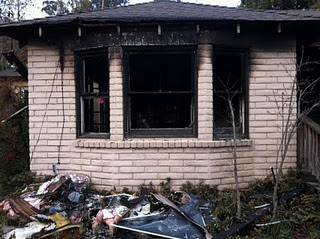
Last Christmas, Zach Zimmerman, a former Red Cross intern, found himself in a similar position as the families he helped during his time here. His family was victim to a home fire sparked by a space heater. Now, 10 months later, Zach reflects on the process of recovery and how his experience at the Red Cross helped him get through the hard times.
It has been a long road for Zach’s family from the day the fire occurred to when his house was finally rebuilt. The weeks following the fire and Zach’s first encounter with his childhood home were particularly difficult, “Walking through the house, I'd see things from my childhood that were extremely sentimental and the remains of what my mom had worked so hard to create for us: a home.”
Eventually, his family regained hope that they could successfully pick up the pieces and rebuild their lives. “As new hardwood floors went in, debris and glass was taken out of the yard and a fresh coat of paint was applied, I found myself excited to move back in,” Zach said. “This fire helped me put a myriad of things into perspective. Things are really just things, and nothing comes to being more important than your family.”
Zach stressed the importance of a strong support system when going through a traumatic experience. Family and friends can be the rock you need for long term recovery. “Whether it’s helping you sort through the rubble, or simply taking you out for a much needed day of fun, your family and friends are the best healing doctors in the world.”
As Red Cross interns, we are able to accompany teams when they respond to actual home fires that occur in the greater Chicago region to help communicate with the families and see them through the disaster. Zach and I have both been on the scene while families cope with disaster. When I asked how his time at the Red Cross helped him recover he said, “With the experience seeing others deal with the devastation of a fire under my belt, talking to my family about the fire was easier for me. I knew what they needed to hear, and I also knew how to help them realize the positives in the situation.”
It is crucial to get a kit, make a plan, and be informed. Through this disaster, Zach and his family learned the importance of being prepared first hand. “We have created an emergency evacuation plan to be prepared if something like this ever happens again. It's critical that everyone knows what to do in a situation like that. Being prepared can only benefit you, so take the time to make sure you're ready to act when a disaster happens.”
The American Red Cross offers immediate support after a disaster, but long term recovery is equally important. For more on Zach’s experience, read his blog post.
Written by: Katie Donabedian
It has been a long road for Zach’s family from the day the fire occurred to when his house was finally rebuilt. The weeks following the fire and Zach’s first encounter with his childhood home were particularly difficult, “Walking through the house, I'd see things from my childhood that were extremely sentimental and the remains of what my mom had worked so hard to create for us: a home.”
Eventually, his family regained hope that they could successfully pick up the pieces and rebuild their lives. “As new hardwood floors went in, debris and glass was taken out of the yard and a fresh coat of paint was applied, I found myself excited to move back in,” Zach said. “This fire helped me put a myriad of things into perspective. Things are really just things, and nothing comes to being more important than your family.”
Zach stressed the importance of a strong support system when going through a traumatic experience. Family and friends can be the rock you need for long term recovery. “Whether it’s helping you sort through the rubble, or simply taking you out for a much needed day of fun, your family and friends are the best healing doctors in the world.”
As Red Cross interns, we are able to accompany teams when they respond to actual home fires that occur in the greater Chicago region to help communicate with the families and see them through the disaster. Zach and I have both been on the scene while families cope with disaster. When I asked how his time at the Red Cross helped him recover he said, “With the experience seeing others deal with the devastation of a fire under my belt, talking to my family about the fire was easier for me. I knew what they needed to hear, and I also knew how to help them realize the positives in the situation.”
It is crucial to get a kit, make a plan, and be informed. Through this disaster, Zach and his family learned the importance of being prepared first hand. “We have created an emergency evacuation plan to be prepared if something like this ever happens again. It's critical that everyone knows what to do in a situation like that. Being prepared can only benefit you, so take the time to make sure you're ready to act when a disaster happens.”
The American Red Cross offers immediate support after a disaster, but long term recovery is equally important. For more on Zach’s experience, read his blog post.
Written by: Katie Donabedian
Wednesday, October 12, 2011
What’s your number?

"Have you ever been asked 'What's your number?' or, better yet, 'What's your friend's number?'
In this tech-dependent culture, you may not know even your best friend's digits off the top of your head these days. I know I don't. Here we are in the midst of a Blackberry outage and have I saved my phone numbers somewhere on hard copy in case I can’t access them on my phone? Nope.
To admit this may render me a public disgrace to my employer (the Red Cross), but shamefully it’s true. I have a preparedness kit in my home, office and car and I’m trained in CPR and first aid but haven't backed up all the contact information on my phone. I haven’t taken this one simple step that could really make a difference if something unexpected happens. I talk to my sister in Michigan at least once a day but could I tell you her phone number if I needed to? Umm, sadly no I could not. She has an Indiana area code for some reason and that's about all I know...
Today I pledge to do one thing and that’s to print off my contacts in case I need them. I may even go a few steps further and save them to a zip drive and email them to myself so they live online too…
Read about more easy things you can do to save yourself a headache in a disaster or something as simple as a smart phone outage.
Martha Carlos is the Communications Director at the American Red Cross of Greater Chicago. She's hoping this shameful public confession will spur her on to(finally) do the right thing.
Monday, October 10, 2011
Patient Connection: Connecting Families to their Runners at the Chicago Marathon
 Red Cross volunteers are buzzing around the medical tents at the Chicago Marathon. In the biggest tent, like a scene from M.A.S.H., rows of injured and exhausted runners recover in temporary cots from the previous twenty-six mile test. Spectators converge on Red Cross booths, desperately seeking their loved ones, fearing they’ve been injured or rushed to a hospital. The volunteers work with the Patient Connection program of Red Cross—set up to respond to mass disasters when they occur.
45,000 runners participated in the Chicago Marathon this year. With this many people pushing their bodies as far as they can go, you can imagine that quite a few drop out from exhaustion or injury. Even those who finish may not be capable of making it further than one of the cots in a medical tent. In cases like these, mothers and sons easily lose each other in the confusion. A woman might hear that her sister was injured, but has no idea where in this massive city she could be. That’s why Red Cross is here.
A man with his son approaches a volunteer at one of the tents. He's heard that his wife, a runner, was being held in a medical tent, but can’t find her. “They said she might be sent to the emergency room!” he says. The volunteer takes down the runner’s name and checks the runner’s location in a computer system, which shows the exact tent and cot number where the woman is. She tells the man his wife has been found, and she's being treated by the marathon’s team of trained medics. In 45 minutes, she’s on her feet and reunited with her family.
Volunteers on site enter the names of runners being sought by families into a computer system. Back at the Chicago Red Cross headquarters, Carol Mosley is on a computer in her office, with the “sought” list up on her screen, busily switching between websites, cross-checking the list with hospital admittances, tracking participants as they run, speaking to families on the phone. If a runner is admitted to the hospital, Carol contacts the person seeking them, and lets them know where to find their runner. Without this system in place, family members would be separated—they may find out that their runner has been hospitalized, but have no idea to which of the Chicago area hospitals they’ve been admitted.
The Chicago Marathon is a great opportunity for the Red Cross team to test out their ability to respond to large disasters where many people are hurt. Granted, we won’t get prior warning of a stadium collapse, or a train derailment, but the marathon gives volunteers an opportunity to implement their disaster response skills, and it’s reassuring to know that the systems in place have been put to the test. In the event of disaster, the primary concern is making sure loved ones are safe—Red Cross is here to help.
For more information on the Patient Connection program, visit:
Written by: Jonathan Bressler
Thursday, October 06, 2011
We’ll miss you, Steve Jobs
 The topic of today’s elevator conversation is certainly, in most offices, the passing of Steve Jobs. We’re likely to see an article from every major news organization on the man’s life and vision, on his passion to change the world. There’s no denying his importance. In the late 1970s, when the energetic entrepreneur was first getting started, only a select few people understood the capacity of computers to change everything about our daily lives.
In his life of work, Jobs worked relentlessly to bridge the gap between human and machine—to make machines make our lives not just easier, but more interactive and more accessible. Thanks to one of his many infamous creations, the iPhone, we can look up restaurants or directions from just about anywhere. We can skype friends and family across the globe, far from a computer. We can get instant, up-to-date facts to resolve any bar dispute—from how many coins you can have and still not change a dollar, to who had the lowest E.R.A. in 1988, or the status of your neighbor’s relationship with that guy from the gym.
Of course, there are plenty of legitimately helpful uses for the iPhone as well. Let’s say, for example, disaster strikes. Who knows in what form—a flood, an earthquake, a tornado. You might lose your home, and need desperately to find a shelter. Well, there’s an app for that, too.
Or, if for some reason you don’t like the iPhone (we’re “don’t ask, don’t tell” on smart phone preference), there are some great apps for Android phones as well. Get an emergency first-aid & treatment guide to manage almost any medical emergency—useful to medical professionals from anywhere, even offline—or let Dr. Oz guide you through an emergency situation.
None of this would have been possible without Steve Jobs’ unique vision for changing the world. His work in developing the personal computer from a pipe dream to a device we carry in our pocket has allowed medical and emergency workers to perform their jobs quicker and more effectively. Computer systems now allow health care professionals to communicate patient information electronically, and every day we see new developments, things that will become essential to treatment and to emergency care. Jobs may have passed away, but his robust vision of change will not soon fade. Just see our blog post from two weeks ago: technology has become an integral part of health and emergency care, an integral part of nearly every facet of our lives, and we have few people to thank more than Steve Jobs.
Written by: Jonathan Bressler
Monday, October 03, 2011
Did you see Contagion and did it freak you out?

Doctors say that spread of a pandemic type virus in the movie Contagion has a kernel of truth. We aren’t trying to freak you out or scare you into bathing in vats of germ sanitizer but it’s something we should probably think about-especially when we all know flu season is coming to schools, daycares and offices near us. Below is an excerpt from story from USA Today on the subject and some of our thoughts on it.
Contagion has already has brought in more than $44 million at the box office in its two-week run. USA Today chatted with doctors and pharmacists who spend their days thinking, and sometimes experiencing, real-life worst-case scenarios when it comes to deadly epidemics. Contagion shows a world where the people who keep civilization together — police, firefighters, sanitation workers, supermarket clerks — are either sick, dead or at home with their families while garbage piles up, buildings burn unchecked, and gun-toting thieves ransack the suburbs for food.
The story goes onto say that it happened to a much lesser extent in Toronto during the 2003 Severe Acute Respiratory Syndrome (SARS) epidemic, which killed 44 people in Canada. "Support staff didn't figure their jobs were important," says Tom Kirsch, a doctor of emergency medicine and co-director of Johns Hopkins' University's Center for Refugee and Disaster Response, Baltimore. His center has been thinking hard about what he calls the "willingness to respond."
Tom Kirsch is also a member of the American Red Cross Scientific Advisory Council. The American Red Cross recommends taking simple precautions like hand washing to avoid the spread of any type of flu. Here are some tips that we recommend on this matter including prevention, symptoms and how to care for others with the flu and if you have little ones, we have a super cute free anti-germ program for kids 4 to 7 called Scrubby Bear.
Related link
Spike Lee (a different one, not that one)talks how hand washing cleanses your mind
Monday, September 26, 2011
Reporting a Robbery via Facebook. Strange News?

The Associated Press reported today that a woman used Facebook to ask friends to report a robbery.
I love reading the news, not just the regular stuff but the water-cooler-conversation inducing fodder too. I was looking for a mindless diversion, something like this, “Pumpkin Found Hanging in Pear Tree” when I clocked on the “strange news” link in my e-mail this morning.
Today’s story hit a little closer to home, it was about a woman who used Facebook to ask for help after a robbery. Maybe it’s because I work where I do and stories about “tweeting for help” have become commonplace for us at the Red Cross but I think this is actually pretty common. We even did a recent study “Social Media in Disasters” that backs this up. It showed that about half of the respondents said they would consider asking for help during a disaster or to report a crime via social media channels; 3 out of 4 of those would expect help to arrive within an hour.
Would you turn to social media for help in a disaster or emergency? Have you already done so? Tell me your story.
Martha Carlos is the Communications Director at the American Red Cross of Greater Chicago
Friday, September 23, 2011
AmeriCorps Volunteers Help Carry Out Lifesaving Mission of the Red Cross
 AmeriCorps has been a long time partner of the American Red Cross that helps the Red Cross achieve it’s mission by paying special attention to the neighborhoods and communities that are in need of life saving services, but are least likely to be able to afford them. This federal initiative is carried out locally by full and part-time participants that focus on a mission that is quite similar to that of the Red Cross. AmeriCorps embraces:
•Getting Things Done by helping a community meets its education, public safety, environmental and other human needs through direct service
•Strengthening Communities by fighting illiteracy, building affordable housing and helping communities respond to disaster
•Encouraging Responsibility by fostering civic engagement through service and volunteering
•Expanding Opportunity by providing members with job skills, invaluable experience, and scholarship or loan repayment for school or job training
Members go through an extensive training process to provide service to society through community organizations. This week, I had the opportunity to meet new members of the AmeriCorps program that were in CPR training at the Rauner Center, the offices of the American Red Cross of Greater Chicago. Talking with Chris Schifeling and Anne Bowlby gave me a better understanding of their role within the Red Cross.
Chris spent two years working with Teach for America and wanted to continue to have “direct contact with communities in need.” The values of the American Red Cross and the politically neutral aspect of our mission statement stood out to him. He is looking forward to helping communities in Chicago that do not receive assistance and has truly enjoyed getting to know the other AmeriCorps members during his training.
Anne is very aligned with the service aspect of AmeriCorps and the Red Cross. Prior to her training at the Chicago Red Cross, her only experience with the Red Cross was through blood donations. She believes in the “trickle down effect” that important training programs from the Red Cross can have on communities, and encourages those who are looking to do service to “lend a hand wherever you can.” She knows that the practical implication of skills learned from AmeriCorps and the Red Cross will help her “give back to [her] community.”
AmeriCorps members are invaluable in our attempt to enact the mission of the Red Cross. The AmeriCorps program is dedicated to bringing Red Cross safety and health programs to underserved neighborhoods, schools and communities throughout the State of Illinois. AmeriCorps members help us with health and safety programs that include CPR, first aid, HIV/AIDS awareness, community disaster education, youth programs and more. Through our partnership with AmeriCorps, the Red Cross is able to reach youth, minorities, low-income communities and senior citizens.
Get involved in the life saving mission of the Red Cross and AmeriCorps and make a positive impact in the community you live in. Visit www.chicagoredcross.org to sign up for classes, view safety tips or to make a donation.
Friday, September 16, 2011
Children’s Playroom Reduced to Ash: Early Detection of Smoke Could Save Your Home and Lives

The first thing Michael Green heard wasn’t a smoke alarm; it was his daughter Jasmine rushing downstairs to tell him her room was full of smoke. Faulty wiring started the fire, which slowly filled the walls with smoke while Jasmine and her friend played with toys.
“I’m still in shock, but I knew I had to keep my cool and do what was best for my family,” said Michael as he wiped away sweat from his forehead with a paper towel.
As soon as Michael realized there was a fire upstairs, he rushed both children outside, where he could now see flames climbing up the walls of his house. Michael called 9-1-1 and cut off the power, but it was too late to save the second floor of his recently-remodeled home.
By the time the American Red Cross arrived, the entire upstairs was in ruins. Toys, videogames and DVDs were covered with ash, and the family’s new puppy wandered around sniffing at the charred remains. Jasmine’s bedroom had holes ripped out of the walls and ceiling; even her Mickey Mouse pillows were smeared with soot.
Michael’s wife Adrianne sat with Jasmine in silence, both of them dripping in sweat from the boiling heat. Adrianne’s face was like stone as she sat in shock, holding her daughter by her side. Adrianne received a call at work and rushed home to find half her home had been scorched by fire. Her hands shook as she accepted a bottle of water from Michelle, a Red Cross disaster relief worker. Michelle explained to Adrianne how the American Red Cross could help her family through this difficult time. Due to the severity of the fire the Red Cross would be able to provide the Green family with financial assistance, shelter, toiletries, clothing, food and water.
Sixty-five percent of fire related deaths happen in homes without working fire alarms. Smoke alarms provide a few minutes of advance warning in the event of a home fire, and that extra time can save lives. It is important for all homeowners to follow these safety tips:
•Install smoke alarms in every level of your home, inside bedrooms and outside sleeping areas.
•Test fire alarms once a month and replace the batteries at least once a year.
•Talk to all family members, especially children, about a fire escape plan.
•Practice the escape plan twice a year, if not more.
Michael and Adrianne were grateful that their family made it out safely, realizing how fortunate they were to only lose possessions. The American Red Cross of the Greater Chicago Region encourages every family to be prepared for fire disasters. More information about how to be prepared, including safety tips, are available on the Chicago Red Cross website http://www.blogger.com/www.chicagoredcross.org.
Written by: Joshua Enright Gleason
Thursday, September 08, 2011
With Great Tailgating Comes Great Responsibility
The NFL season is officially underway and Chicago fans are hopeful to get another shot at the NFC Championship. There’s hope for the Bears to finally reach the Super Bowl again for the first time since 1985, but most importantly, this new season means that tailgating has officially begun!
Anytime there’s a home game in Chicago, fans arrive at Soldier Field long before to take advantage of some of the best tailgating in the country. Tailgaters love to grill out and have some hot food to go along with their cold beverages on game day. It’s great to get out and support our team, but while celebrating it’s important to prepare and handle food properly to prevent food borne illness. The CDC estimates that food borne diseases cause approximately 76 million illnesses, 325,000 hospitalizations, and 5,000 deaths in the United States each year. The American Red Cross of Greater Chicago wants to make sure everyone enjoys the fun and excitement of NFL football safely by providing some food safety tips:
•Do not prepare food more than one day before tailgating unless it is to be frozen.
•Don’t cook food partially ahead of time. Partial cooking of food allows bacteria to survive and multiply.
•When packing your cooler, be sure raw meat and poultry are wrapped securely to prevent juices from contaminating ready-to-eat food.
•Transport cold foods in a cooler to minimize bacteria growth.
•Keep foods covered to prevent contamination by insects.
•If you can’t keep hot food hot during the drive to your tailgate, chill the food in the refrigerator before packing it in a cooler.
•Cook only the amount of food that will be eaten to avoid the challenge of keeping the leftovers at a safe temperature. (Also they won’t let you bring it in the stadium!)
•When you take food off the grill use a clean plate, and be sure not to put cooked food onto the same plate that once held raw meat.
•Include lots of clean utensils for preparing and serving.
•Bring water for cleaning if none will be available at the site. Pack wet disposable clothes, moist towelettes and paper towels for cleaning hands and surfaces.
When gearing up for Sunday’s game, remember to be Red Cross Ready and prevent food borne illness. You want to feel your best when watching Chicago play! For more safety tips on grilling, first aid or commuter safety when traveling to the stadium, visit chicagoredcross.org.
Remember to be prepared and… Go Bears!
Written by Joshua Enright Gleason
Photo Courtesy of Chicago Tribune
Tuesday, September 06, 2011
Staying Safe During Back to School Season

As summer comes to an end and parents prepare their children for another school year, there are important topics to address aside from which school supplies and clothes to purchase. Discussing safe practices for back to school should be high on the list, and can make all the difference in determining your child’s well being. While the “when I was your age, I had to walk 4 miles, uphill, both ways, in the snow to get to school” joke may be out dated, many children still walk, bus, bike ride or car pool to and from school every day. It is a parent’s worst nightmare to imagine anything ever happening to their child, so it is wise to take precautions so accidents can be avoided.
The International Walk to School Month is an initiative to celebrate the benefits of walking and it’s only a month away. This means more children walking, rather than taking the bus, biking, or catching rides to and from school. No matter how your child commutes to school, the American Red Cross of Greater Chicago offers safety tips and steps parents and children can take to make this back to school season safer.
Tips for Pedestrians
• Never walk alone – always travel with a buddy.
• Pay attention to all traffic signals and crossing guards along the way.
• Never cross the street against a stop light.
• Be cautious of who is around you – never talk to strangers.
Tips for Bike Riders
• Avoid ill-fitting clothing that could get caught in spokes, pedals or restrict movement.
• Wear reflective colors and material to be more visible to street traffic.
• Always wear a helmet when riding a bicycle.
• Walk your bicycle across all intersections.
Tips for School Bus Riders
• Line up facing the bus, not along side it.
• Never reach under the school bus to get anything that has rolled or fallen beneath it. The bus driver may be sitting too high up to see you.
• After getting off the bus, move immediately onto the sidewalk and out of traffic. If there is no sidewalk, try to stay as far to the side of the road as possible.
• Wait for a signal from the bus driver before crossing the street. Walk at least 10 steps away from the front of the bus so the driver can see you.
It is vital to sit down with your child to discuss safety tips for a stress-free commute to school. Knowing how to prevent unexpected emergencies is the first step in ensuring a great and successful school year. Check out the American Red Cross commuter safety tips for more information. Happy back to school!
Written by: Hannah Segall, Marketing and Communications Intern
Photo courtesy of Visual Photos
Subscribe to:
Posts (Atom)


